THE OBJECTIVE EAR
•
THE OBJECTIVE EAR •

The Nuclear Option
A first lesson in connection, courtesy of nuclear physics.
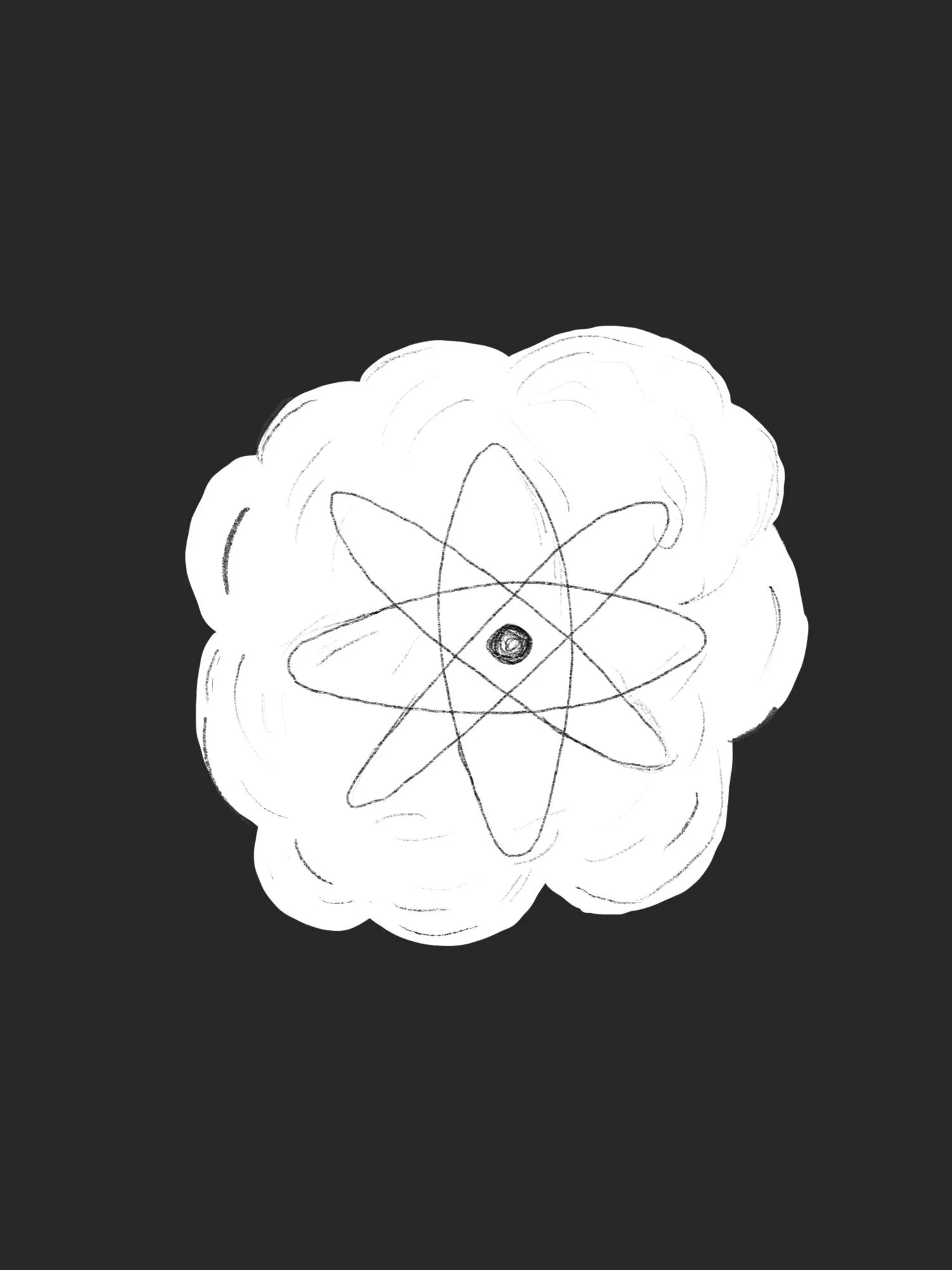
A first lesson in connection, courtesy of nuclear physics.
One early morning in the spring of 2025, I entered the dance studio for my first lesson with the formidable Mayo Alanen.
I arrived wide-eyed, an eager student ready to absorb every morsel of knowledge my new teacher might impart. The first journal entry I have written down in my dancing journal from that day was a lesson on “connection,” a principle fundamental to everything we would do together.
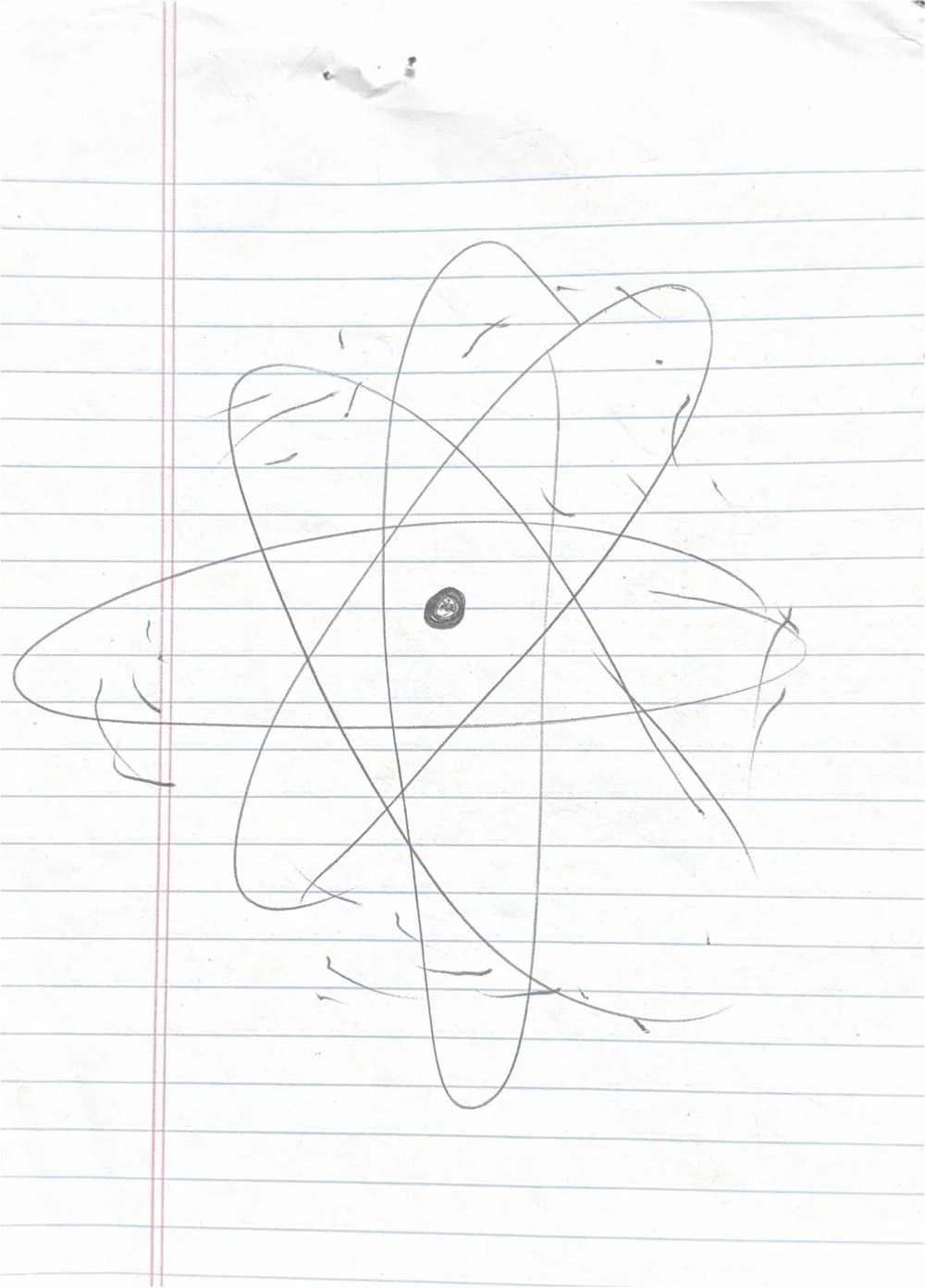
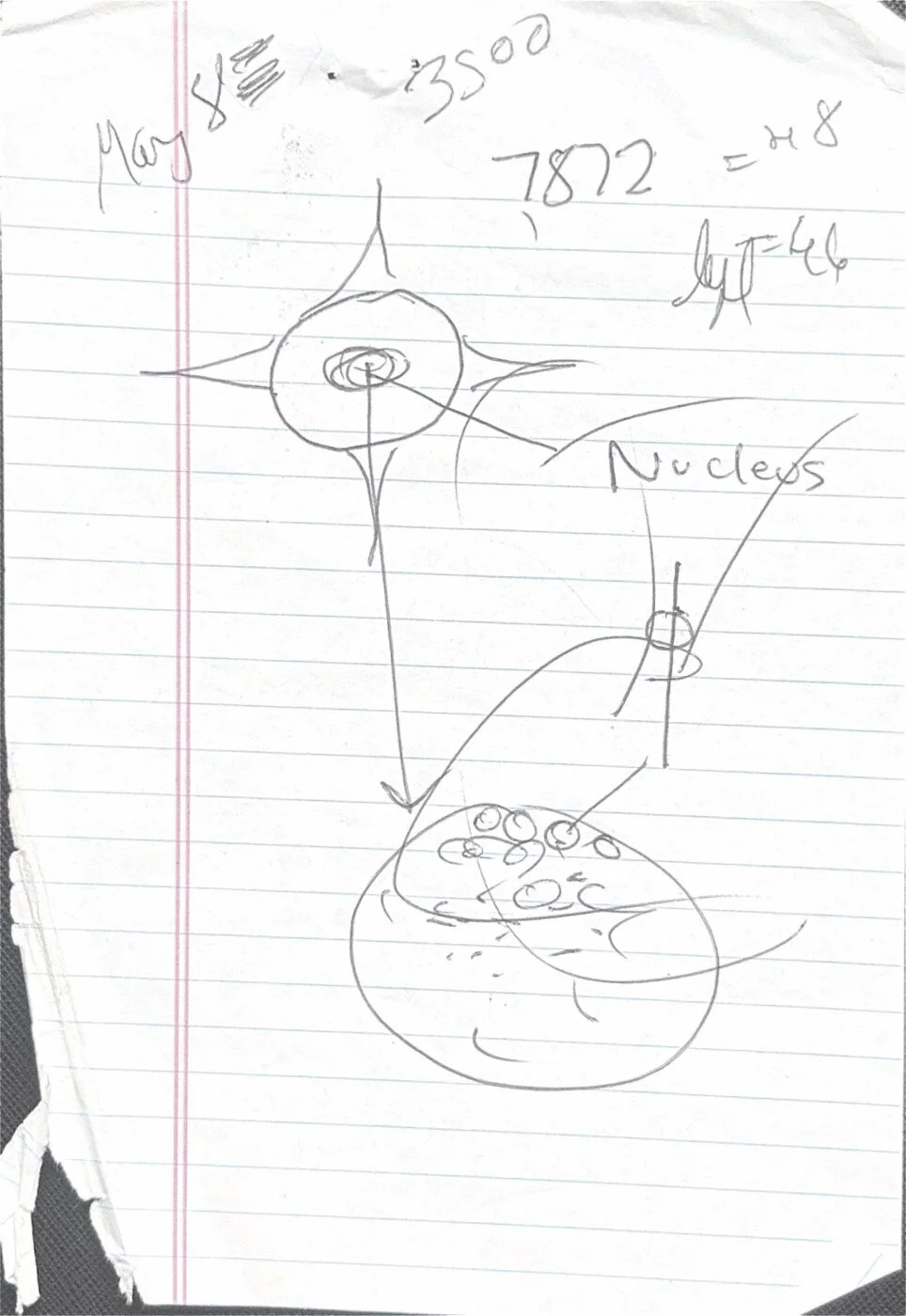
Mayo began by drawing an atom in a random piece of paper. At its center, the nucleus, and inside it, a series of circles representing protons and neutrons, the subatomic particles held together by forces I hadn't contemplated since my high school days.
We were to imagine ourselves as the particles belonging to the same nucleus.
Somewhere between his drawing and the explanation, I became distracted by the images being summoned in my head. I began assigning human characteristics to these subatomic particles. A proton carries a positive charge, while a neutron has no charge at all. The proton seemed firmly committed to being positive, while the neutron remained wonderfully noncommittal. Which one was I? Did I want to keep my options open?
My teacher's voice interrupted my musings. “What happens when the nucleus separates?” Quickly, I searched the answer in distant recesses of my scientific education.
“Uh… I… don't know. Is it bad?”
Very bad, apparently. Nuclear fission. A potentially catastrophic consequence. Think nuclear reaction and the possibility of annihilation.
Oh!
The practical implications of this thought experiment were becoming alarmingly clear. Staying close to my teacher, at a predetermined distance that might vary at any given moment, was now a matter of life or death.
And vary it would.
Connection, I was discovering, was an elusive business. The distance between two dancers changes continuously as they travel across the floor. My responsibility as the follower was to sense the leader's subtlest movements and to respond accordingly, preserving the relationship between our centers. A delicate negotiation of timing, distance, and movement through space. The holy grail of ballroom dance connection.
There would be no uncontrolled drifting, as apparently, the fate of humanity depended upon it.
This first lesson changed my understanding of what it meant to dance together. Two people who are facing one another and performing synchronized steps do not necessarily make a dancing partnership. What transforms the movement into something so captivating that, when you witness it, your eyes are reluctant to wander elsewhere is the dancers’ connection.
The atom would be the first of many inventive analogies my teacher would draw from nature and the world around us to describe sensations that elude explanation. Their meaning gradually reveals itself through your practice at the studio, the occasional choreographed showdance, and the peculiar pressures of competition.
More than a year later, his original drawing remains in my possession, a reminder of that first morning’s lesson and a glimpse of the lessons that lay ahead.
As for what happens to humanity when the dancing couple invades each other's space?
That would be the subject of another lesson in physics. •
Credits & Sources
Illustration: Cindy Gallagher
Original sketches by Mayo Alanen, May 5, 2025.
From CINDY Magazine, Issue No. 2, Fall 2026. Read the full issue

The Architecture of Becoming
“The movement starts with your lats.” On the quiet moment when the body says yes.
On Process & Practice. This recurring column examines the interior mechanics of becoming a dancer — the microscopic adjustments through which the body learns to carry intention. Mastery is assembled in unremarkable hours through repetition and recalibration. Practice is not a bridge to performance; it is the life of the work itself — where the mind trains perception, the spine reorganizes, and a step that once felt impossible quietly becomes available.
“The movement starts with your lats.”
Your what?
The lats — the latissimus dorsi — a quiet region under the armpit and along the back that, until recently, has lived an anonymous life inside the body.
On the dance floor, there is nowhere to hide. The body reveals its ignorance immediately. A simple instruction exposes an entire continent of muscles that have never been consulted. And something unsettling becomes clear: you do not know your own body. You do not understand movement. You are beginning from zero.
To begin ballroom dancing as an adult is to surrender the illusion of competence. But the surrender is not humiliation. It is clarity. And — unexpectedly — it is fun. Once you know that you do not know, the work becomes clean.
“The movement starts with your lats.”
The brain attempts compliance. Signals fire. The shoulders tense. The spine negotiates. Nothing happens. Or worse — everything happens at once.
The step collapses.
The correction is microscopic. Lift here. Soften there. Organize the body. Use the back, not the arms. The arms do not move independently; they react to the initiating movement of the lats.
Use the lats.
There is something humbling about paying to discover a muscle you have owned your entire life.
And then, one day, the brain and the body agree. A piece of the puzzle locks into place. The movement once dissected intellectually travels through the nervous system and reaches its destination. The latissimus dorsi responds! The spine organizes. The arms move through space as if carving air.
For a millisecond, the cloudy sky inside the studio opens.
It is not mastery. It is alignment.
But it feels like revelation.
Perhaps it echoes something ancient — the first time you crossed a room on uncertain legs, wobbling toward a table, determined, barely making it. Beautifully imperfect.
To begin again as an adult is to remember that feeling.
The satisfaction of moving at will.
Unpolished. Incomplete. In the process of mastering.
This is the reward of re-learning — the quiet moment when the body says yes. •
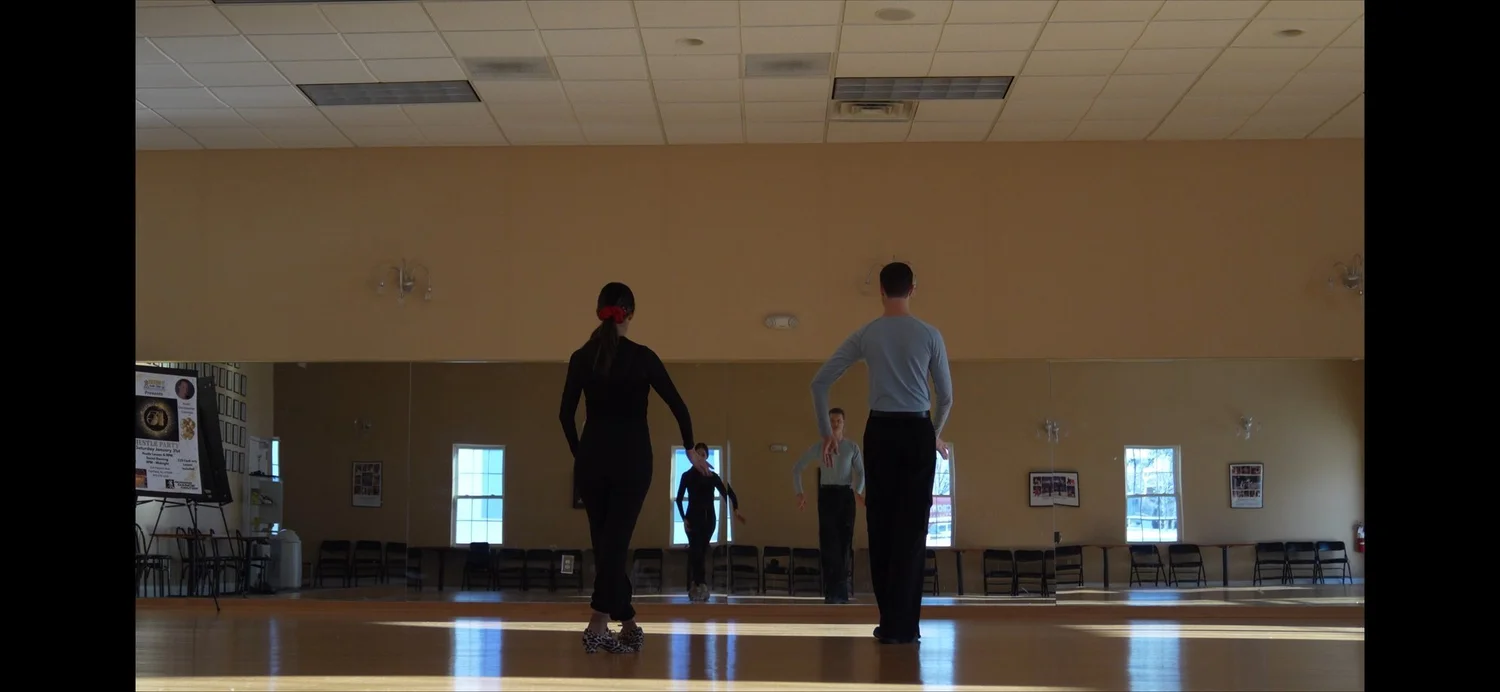
Video still from Competitive: The Bronze Years. Videography by Yara Onyshchenko · From CINDY Issue No. 1, Spring 2026. Read the full issue