THE OBJECTIVE EAR
•
THE OBJECTIVE EAR •

Roman Malkhasyan
A five-time World Champion in American Smooth on why emotional artistry can start in Bronze.
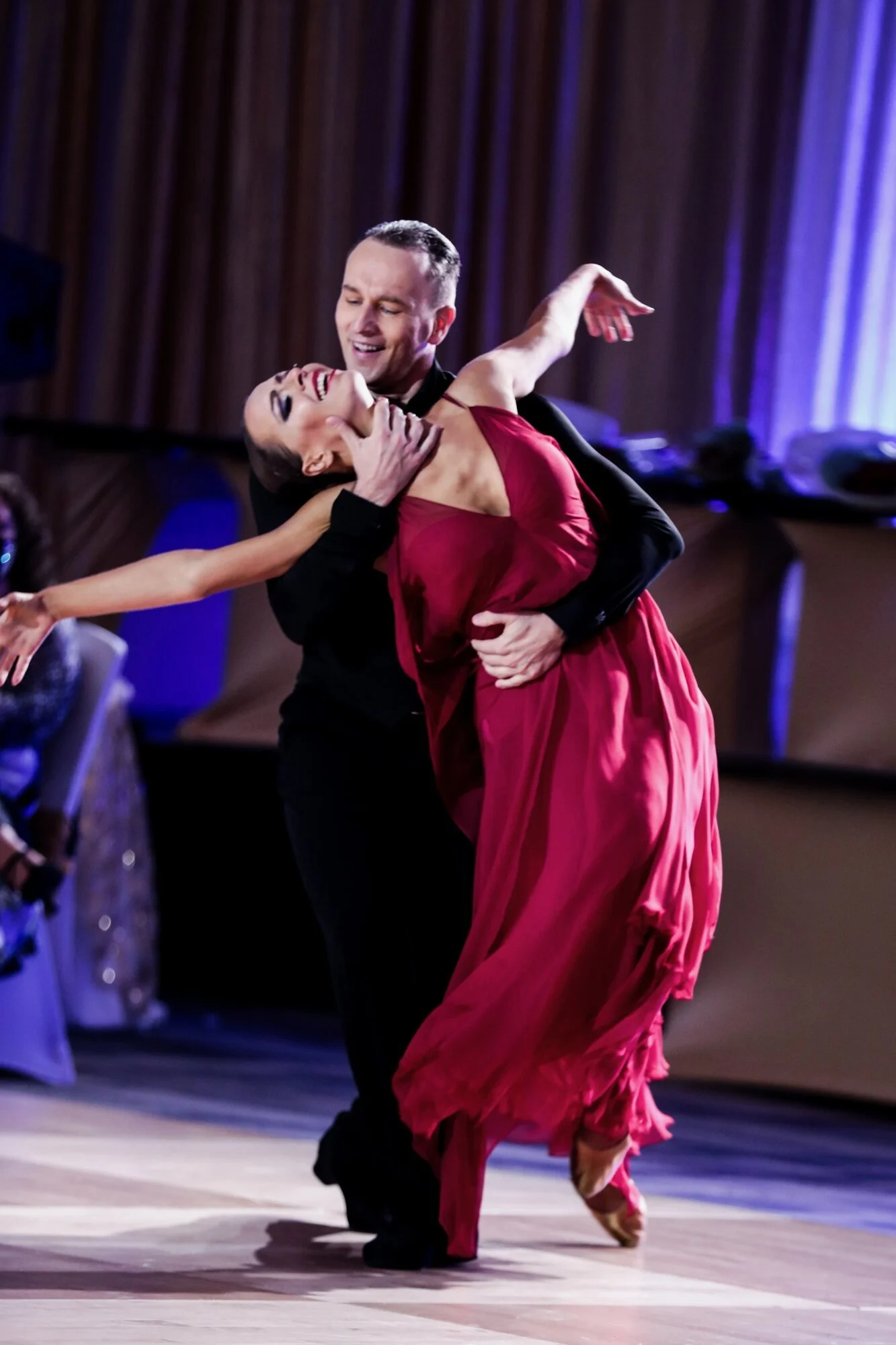
The Art of Emotion
Beyond technique lies another dimension of dancing: the ability to communicate emotion through movement. Why wait until Open Gold? Even a beginner competing in Bronze can start exploring the emotional artistry of dance.
I had imagined that someday, when I reached the Pro-Am Open Gold level, I would devote more attention to developing my emotional artistry. Roman Malkhasyan, a five-time World Champion in American Smooth, challenged that thinking. Why wait?
Watching Roman Malkhasyan and his beautiful and talented dance partner Galina Detkina dance, I am always struck by the emotional range they bring to their performances.
Roman believes that even a beginner competing in Bronze can develop an awareness of emotion while dancing. When I asked Roman what he would look for when judging Bronze competitors, he emphasized technique, certainly, but placed even greater importance on whether the dancer appeared to be having a good time.
So, is this where emotional artistry begins? Enjoyment is itself an emotion. If I finish a dance, return to my table, and can say, I was happy out there. I really enjoyed that waltz, then I have begun to recognize what I felt while dancing. That awareness may be one of the first building blocks toward developing a broader emotional repertoire.
But it is one thing to look emotional while dancing. It is quite another to develop the emotional range that allows a dancer to communicate what the music evokes.
How does a dancer move beyond happiness and learn to communicate a greater range of feelings?
Roman believes that emotion cannot simply be borrowed from another dancer. Copying a professional's facial expressions or gestures does not necessarily communicate anything genuine. As he puts it, “Every emotion has to be born through movement.”
The music has an important role in this process, stirring feelings that we can explore through movement. Roman shared a question one of his teachers asked him years ago, when he was still concentrating primarily on his physical abilities. His teacher asked:
“What do you want me to feel when I watch you dance?”
At the time, Roman was concerned with his speed, his movement, and what he could accomplish physically. He wanted to impress his teacher with what he could do. But the question changed the way he thought about dancing.
It wasn't enough to produce a spectacular movement. He had to consider the emotional impact on the person watching. What did he want that person to feel?
On Nerves and Feeling Scared
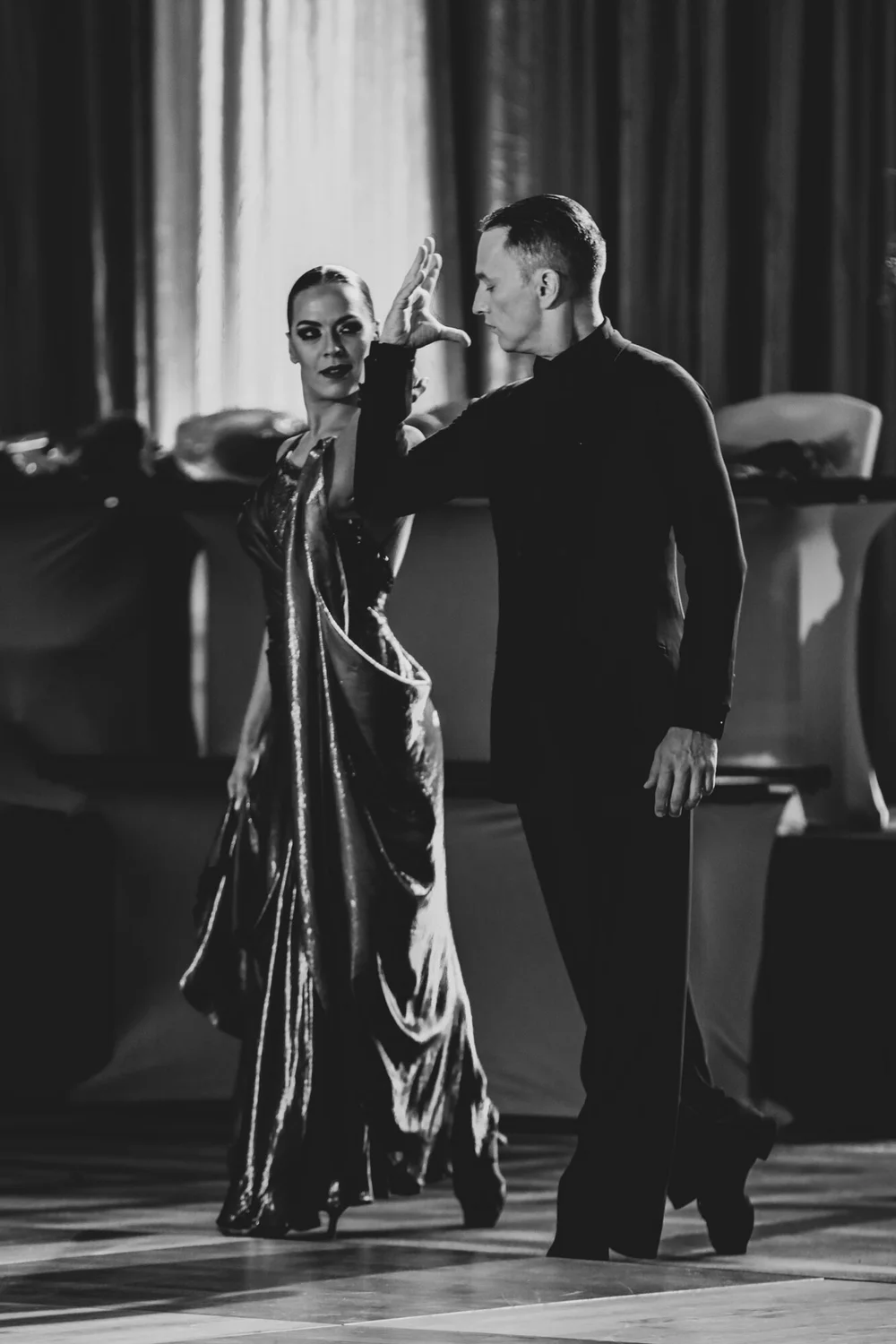
Roman says nervousness never entirely disappears, regardless of how experienced a dancer becomes. Even after years of professional competition, he still feels it before he goes out on the floor.
I find it reassuring that even the most accomplished professionals have to contend with these feelings. I had imagined that with enough experience, I would eventually stop feeling nervous before competing. Apparently, even world champions experience butterflies before stepping onto the floor.
And Roman has certainly had his share of moments when he felt unsure of himself.
When he arrived in America after ten years away from dancing, he wasn't certain how much of his training he would remember or whether his knowledge was still relevant. He began teaching at an Arthur Murray studio, where, on his very first day, he was assigned a group class of twenty people.
There was one considerable complication: he didn't speak English.
He recalls that the class was probably a cha-cha. Having trained in International Style, he needed to learn the steps used in American Style. He watched a video of the steps before facing his students.
“I was sweaty,” he recalled, laughing. “I was scared.”
His uncertainty didn't end with that first class. When people later encouraged him to return to professional competition, he questioned whether he was good enough. He was entering an unfamiliar competitive world after years of being away.
I was surprised to hear him describe those fears. So I asked him what he was afraid of now.
“Nothing,” he replies laughing playful. “I did it all.”
Yet that confidence doesn't mean he no longer gets nervous before a performance.
As beginners, we may be standing at the edge of the floor, waiting for our heat to be called, while our teacher reminds us to smile. Smile, smile! Meanwhile, inside, we feel as though we are going to die.
How are we supposed to reconcile those two feelings?
“But when you start, you transform that energy into emotion,” Roman explains. Rather than forcing a smile over fear, “we learn to use what we feel and express it through movement.”
The Emotional Journey
I suppose actually listening to the music would help!
I confess that I have completed an entire round of competition and returned to my table unable to remember what music I had just danced to. It happens. Lost in between running through a dancer's laundry list of things to remember—choreography, frame, technique—the music itself can almost disappear.
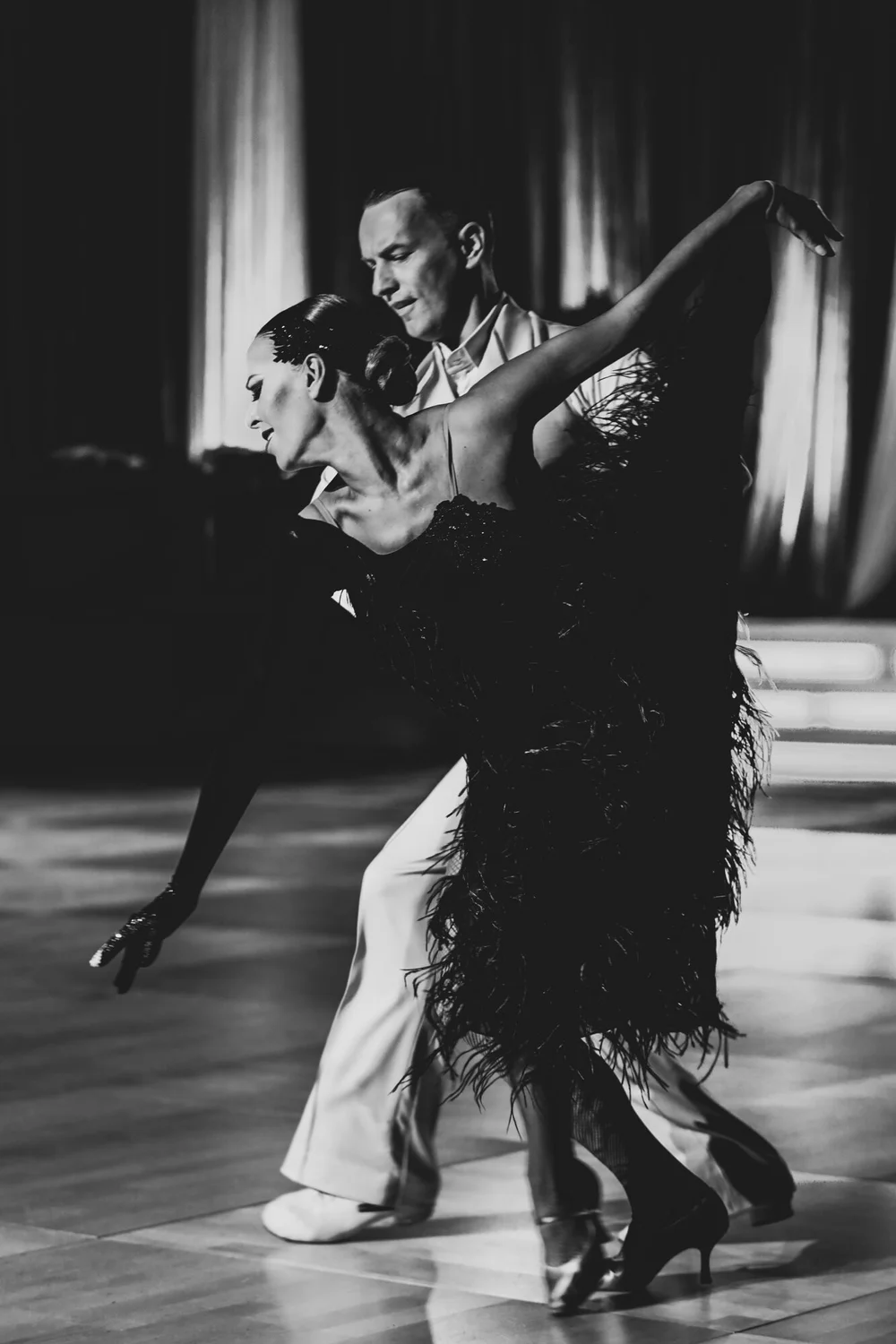
The goal isn't to sustain one emotion throughout an entire dance. Roman describes an emotional spectrum, much like life. A performance becomes more interesting when the feelings develop and change.
As in a good story, a dance unfolds through shifts in mood and feeling, taking us on an emotional journey from beginning to end. That journey gives the performance another dimension beyond the steps themselves.
Beyond Technique
Technique remains essential. There will always be another skill to learn, another movement to refine, another detail to improve. But Roman's perspective is that emotional expression should develop alongside those skills, rather than waiting until the technical work is finished.
And what about the judges?
Roman remembers preparing for his first world championship, when he and Galina were competing against established four-time world champions. They were pushing themselves to the limits of their physical abilities, determined to give everything they had.
It was during that period that another lesson about emotion became particularly important. His teacher reminded him that judges, too, are human beings. It wasn't enough to impress them with movement. They needed to feel something.
Judges appreciate technique, musicality, beautiful lines, and movement, but they also respond emotionally to what they see. When two dancers demonstrate comparable technical abilities, the performance that creates a stronger emotional connection may be the one they remember.
Perhaps that is what makes emotional artistry so compelling. We are not simply showing an audience what our bodies can do. We are inviting them to experience something emotional with us.
As Roman put it, “Emotion is a powerful thing. Very powerful.” •
Credits & Sources
Portrait: Courtesy of Roman Malkhasyan
Photography: LaHari Photography
From CINDY Magazine, Issue No. 2, Fall 2026. Read the full issue