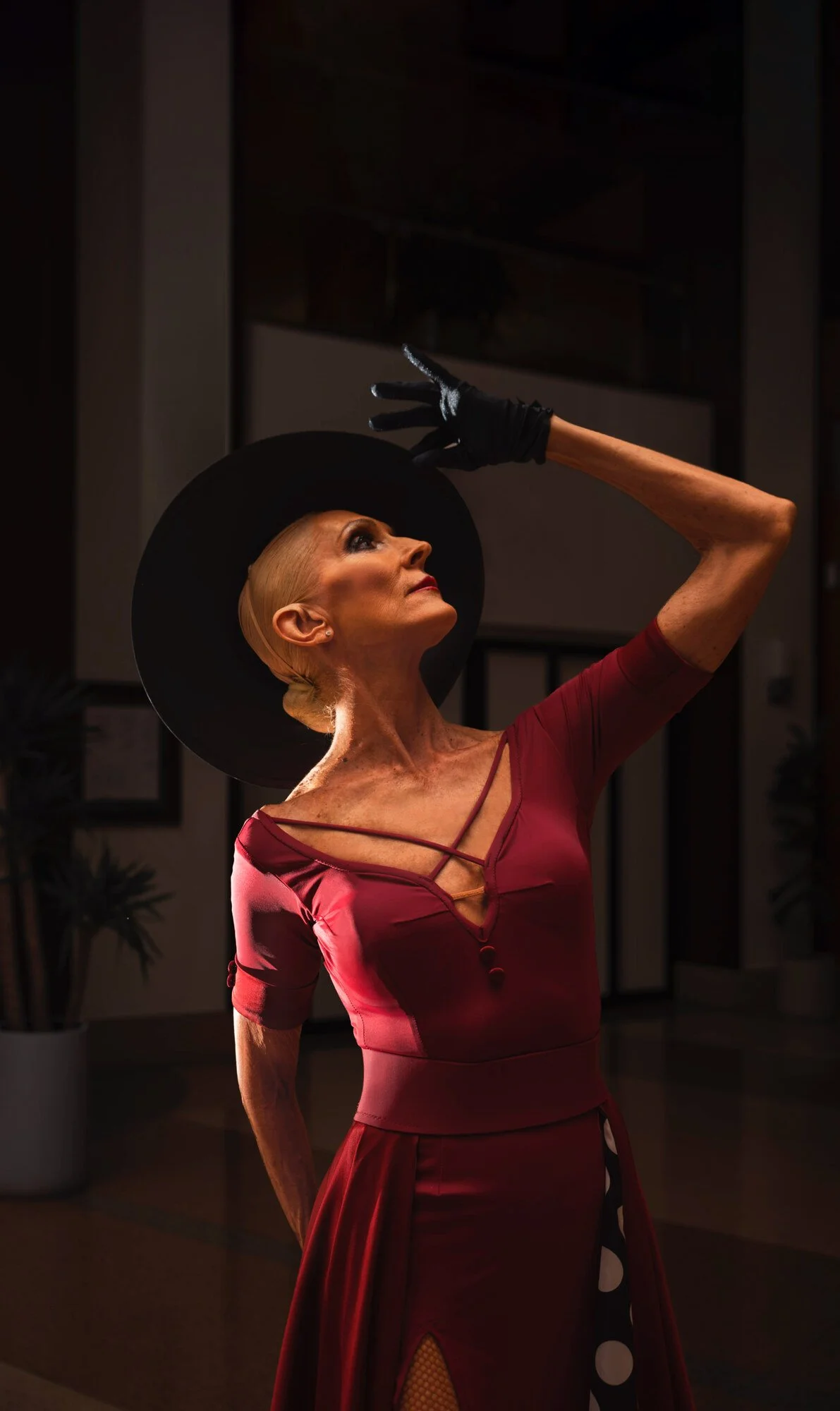
Glamour Girl!
A Story of Fashion, Music and Dance
On an empty ballroom floor, the dancers’ blank canvas, Kristi and Mayo created a world that existed for ninety fleeting seconds. And in that brief moment, they took me, the eager observer, on a journey of imagination and discovery.
PART ONE: Infatuation
In 2025, the Ohio Star Ball Dance Competition felt like the grand finale of the fireworks that had been my first year on the DanceSport circuit as a Pro-Am student.
It started in July, with the Empire Dance Festival in New York City, my very first competition. Capital in Washington, D.C., followed, and then it was on to Orlando, to the mother of all competitions: the United States Dance Championships. By then, I was thoroughly captivated by the world I had discovered the year before, on one spring afternoon.
Ohio was a whirlwind. In and out: arrive one evening, Rhythm early the next day, Smooth the morning after, and then home. Quick and efficient, before my Thanksgiving preparations fell out of step with the traditions I had developed over a lifetime of holiday planning. Never mind that this would also be the first year my youngest son and his fearless girlfriend would take over the family Thanksgiving feast. Surely, your adult children still need your steady hand and the wisdom of years to properly dress the turkey. No?
During my first hours in Ohio, as is usually the case for me, I felt dizzy trying to get my bearings in the new environment, absorbing the pulse of competition, and experiencing what this new place had to offer. My two days at the competition vanished in the blink of an eye, and suddenly, I was back at the airport. Veni, vidi, vici?
But the statuesque Kristi Nadvornik, a Mayo Alanen’s student and my new Rhythm Bronze sister, remained in Ohio. I knew she was staying to compete in the legendary Best of the Best Show Dance, and thankfully, the event would be livestreamed. Thank you, Ohio Star Ball!
When the time came for Kristi's show dance, I was back in New Jersey, driving home from the school drop-off, so I pulled onto the shoulder of the road, the lane reserved for emergencies. This was, after all, an emergency. I could not miss Kristi.
And I was rewarded with a performance that captured my imagination.
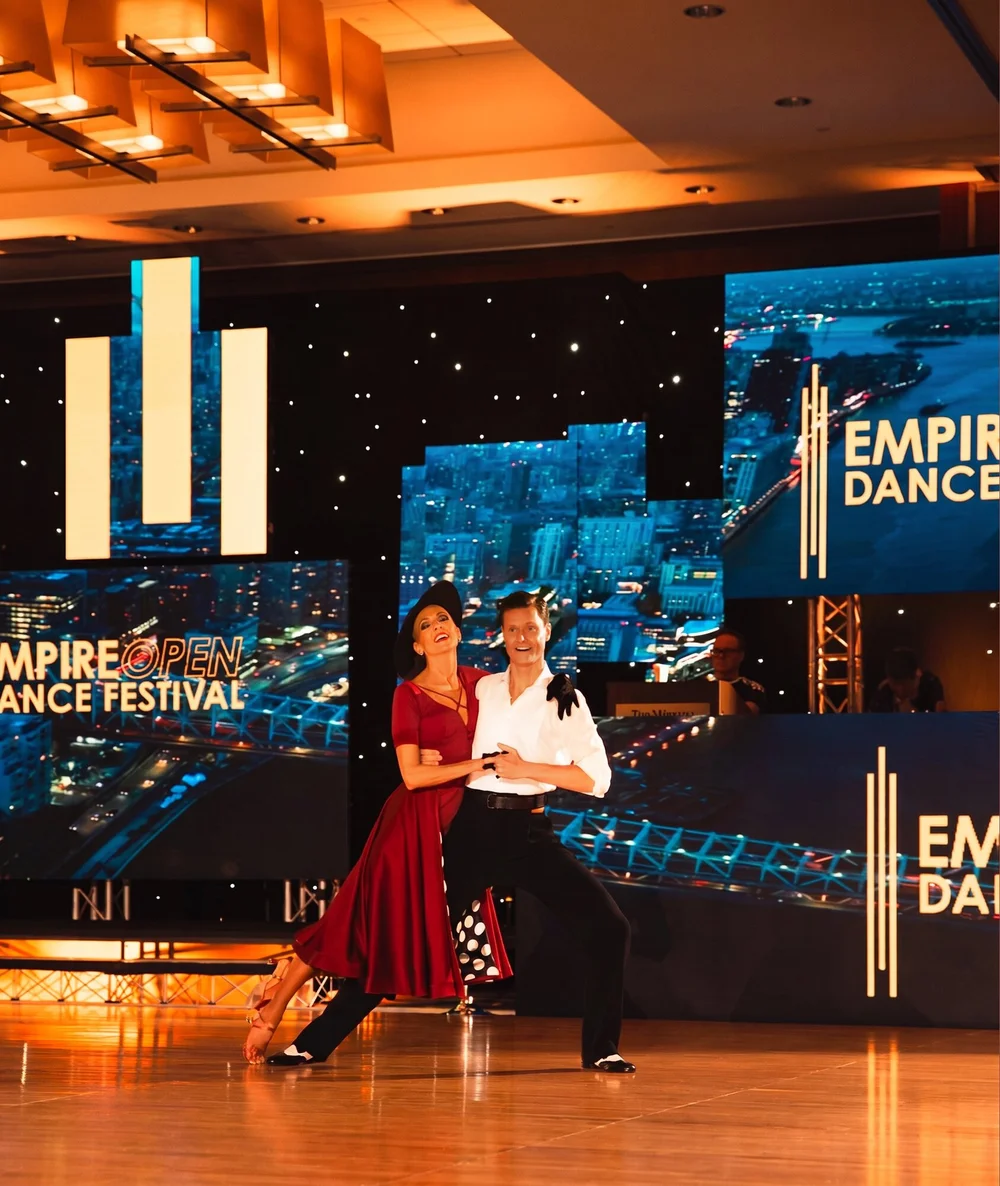
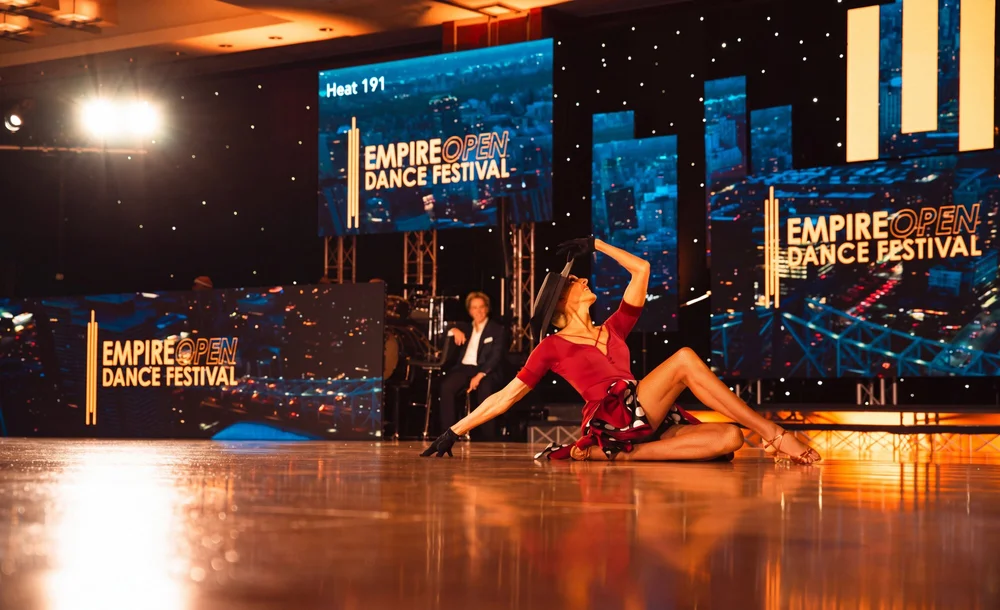
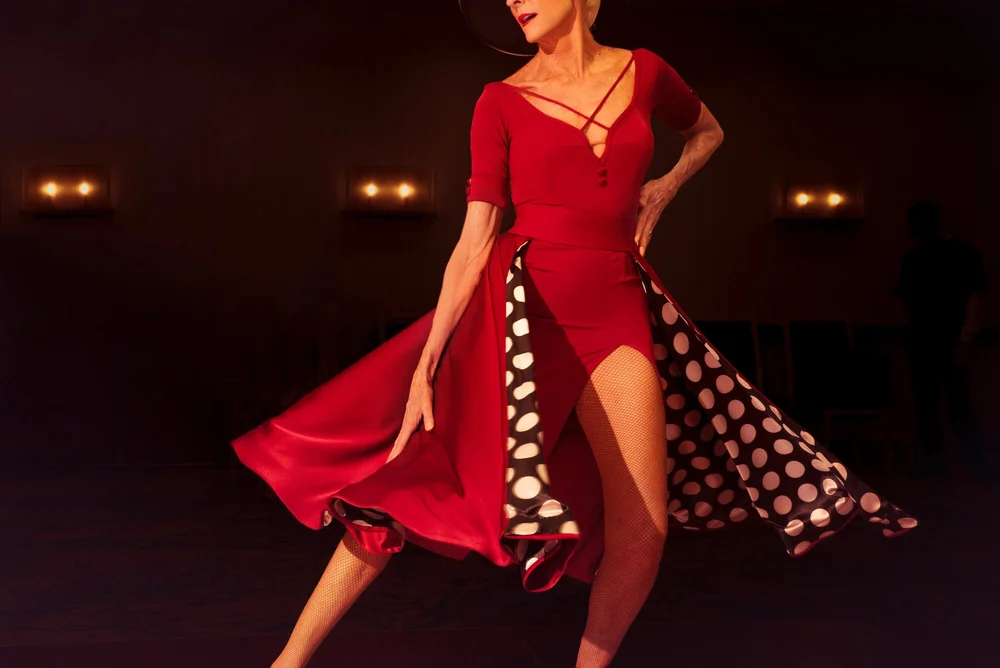
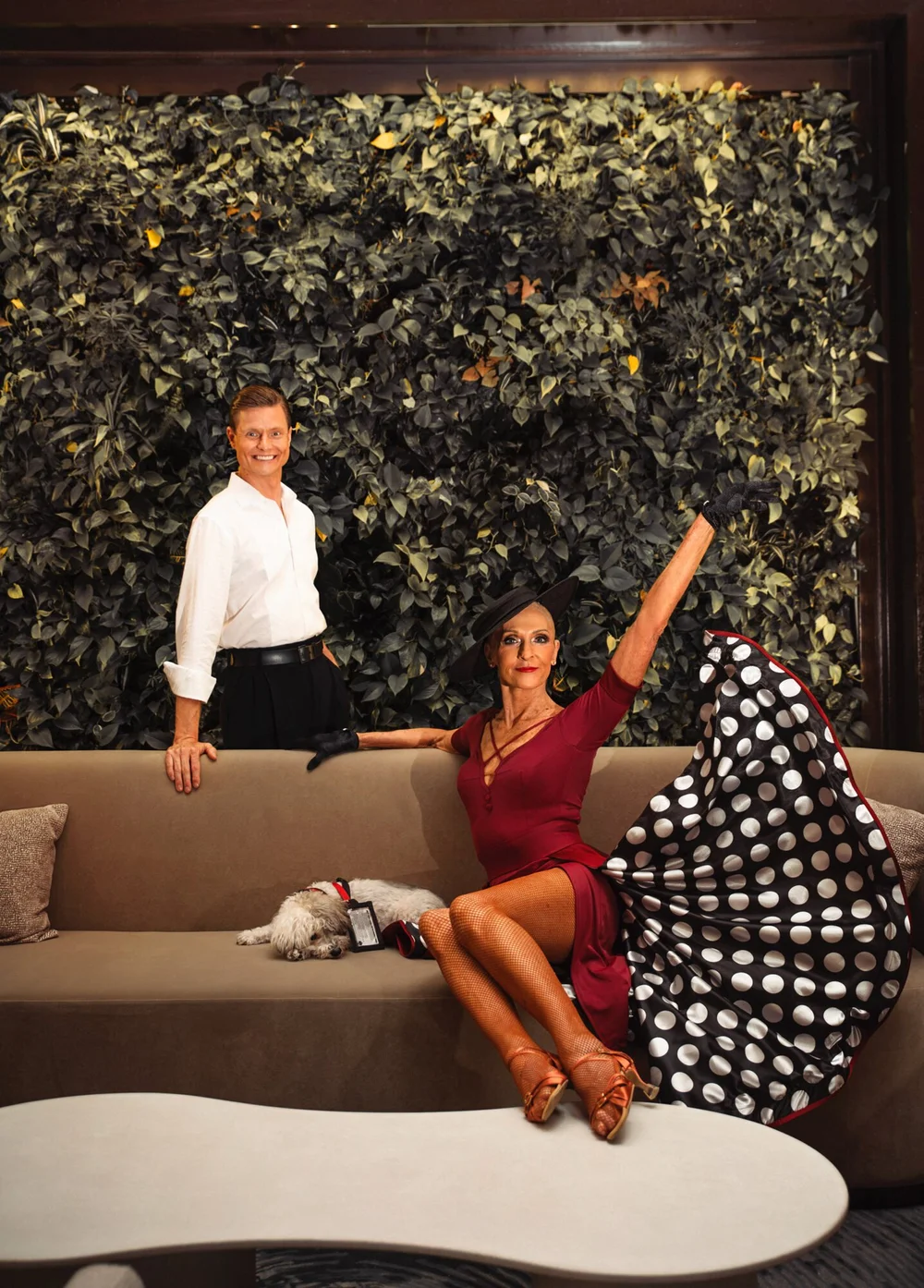
Kristi and Mayo appear on the floor. Slowly, he made his way toward her. She moved with a sensual, almost gooey walk, as though the music itself were inviting her in. And then: Oh, what a dress!
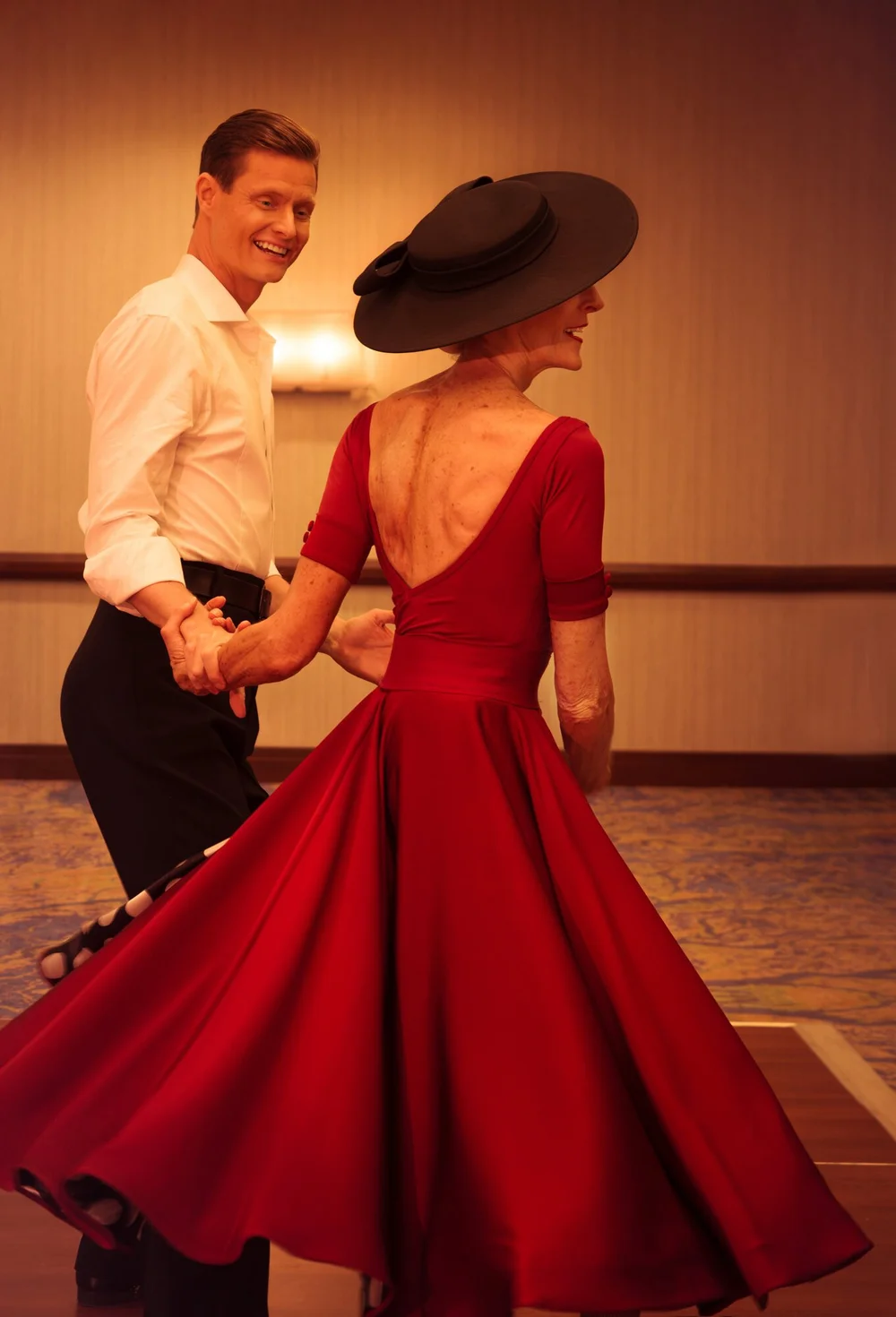
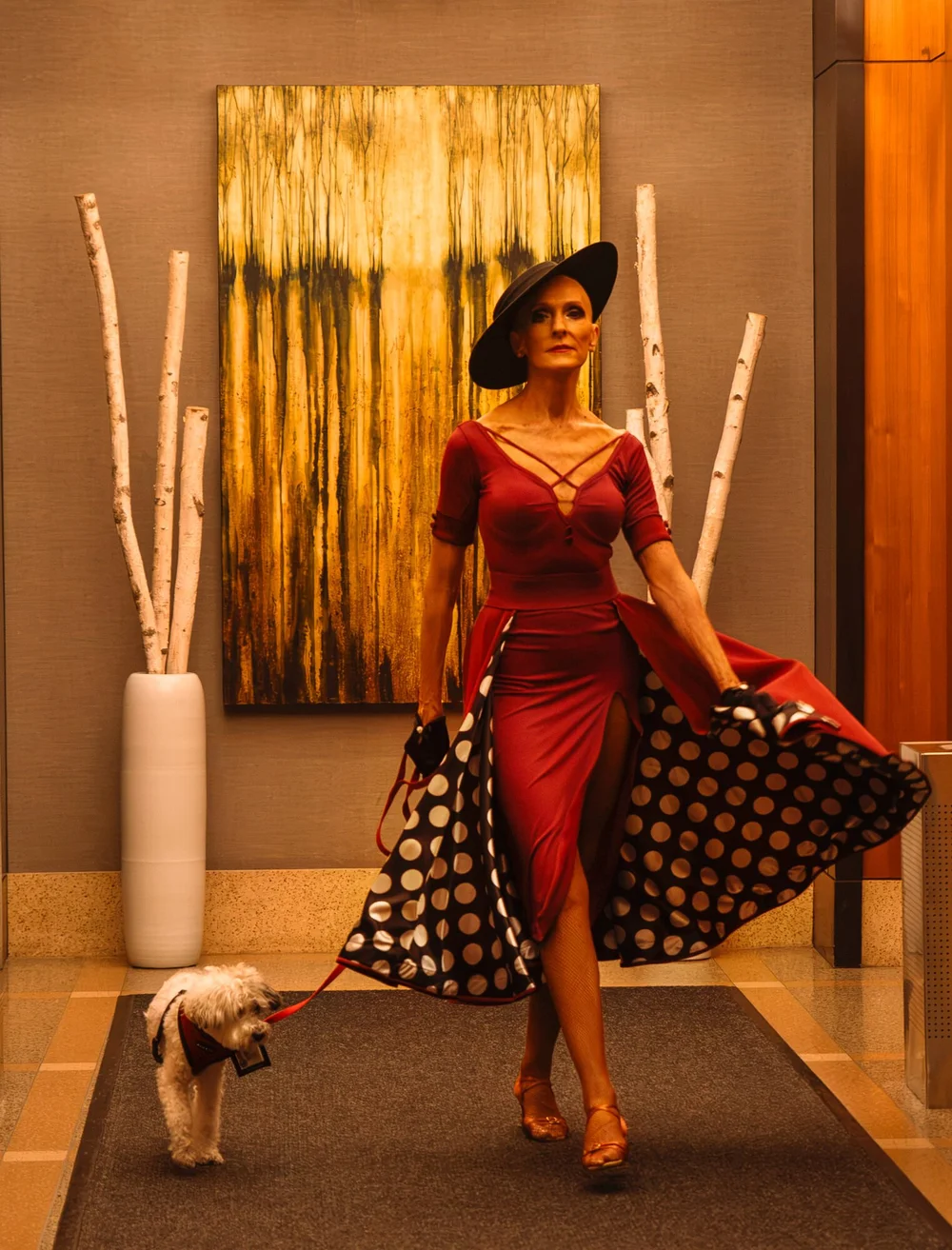
The dress said it all. A fitted bodice. A narrow waistline. A full, flowing skirt. The hat. The gloves. A figure eight: Corolle and En 8. I recognized that silhouette immediately!
To me, it echoed Christian Dior's New Look, introduced in Paris in his inaugural 1947 collection and immortalized in the famous Bar ensemble.
I have followed fashion and the great couture houses for years, acquiring perhaps more hardcover books on their histories than I care to admit. Dior is no exception. Who hasn't read Marie-France Pochna's Christian Dior: The Man Who Made the World Look New? watched the documentary Dior and I, or seen the television series The New Look? Right?... Right?
This show dance was love at first sight. The dance continued to replay in my mind in the days and weeks that followed. Naturally, I wanted to know how this idea had come to life. Where had the dress come from? Was Dior really part of its story, or was that something I had brought to it myself? What music was this? And how had a Pro-Am couple taken all of these elements and turned them into such a mesmerizing performance?
Months later, on an April afternoon, I sat down with Kristi at the Metropolitan Museum of Art's chic Balcony Lounge, sipping a refreshing Masterpiece Martini, one of the lounge's signature cocktails, to find out more about how this dance came to be.
II. The Interview
The Idea
Where did the idea or inspiration for Black Coffee come from?
“I knew I wanted to do something from the fifties. That was the decade I was born in. And I wanted to do something kind of gooey.”
Gooey. The word that describes it all. An adjective that can mean soft, wet, sticky, or sentimental. Like a toasted marshmallow melting in your mouth as you sit around a bonfire, remembering the adventures of the day.
Gooey. A piece intended to have this quality would have to reveal its personality through the music, movement, visual effect, and the entire atmosphere of the performance.
“My previous show dance was in 2023, at Ohio Star Ball's Best of the Best. It was in memory of Ryan, my partner of twenty-five years, who had passed away just a few months earlier. I called it Ryan's Song, but the music was actually Angelina Jordan's cover of ‘Bohemian Rhapsody.’ It was a beautiful experience.
“With Black Coffee, I took a much more active role in the creative process. After I found the music, I looked for ideas for the costume; I found the fabric; I sourced the accessories. It was the first time I was involved at this level of intensity.”
The Music
How did you choose the music?
“I did research for it. I saw this performance on Facebook where Carrie Underwood, Christina Applegate, and Kristin Chenoweth, a very big Broadway star, sang this medley of songs from that time period. They were all dressed up with blonde fake wigs and pink dresses, and they were hilarious!”
“I just loved it, and I thought, why don't we combine songs and make it a little different from just one piece of music?”
“I found music from the fifties that had a certain feel. I put together three different options, each combining two or three songs. Each had a slightly different quality. We only had ninety seconds for the performance at Ohio Star Ball, so we took the music to Diana McDonald, who created the most amazing arrangement.”
Diana McDonald is a World 10-Dance Champion, choreographer, coach, and longtime figure in American DanceSport. She co-owns Rogers Dance Center and is active in organizing competitions.
“As Diana listened to these pieces of music, she said, ‘You know what I hear? I hear a conversation between a woman and a man.’ Diana is amazing. She took Peggy Lee's ‘Black Coffee,’ and then she pulled in T-Bone Walker's ‘Glamour Girl,’ the part where he sings ‘glamour girl, glamour girl.’ You hear those lyrics interspersed throughout the Black Coffee show dance.”
“She blended it so well. I don't know how she did it, but she did it!”
Later on, I discovered that “Black Coffee” was written in 1948, with music by Sonny Burke and lyrics by Paul Francis Webster. Interestingly, before becoming a lyricist, Webster had worked as a dance instructor at an Arthur Murray studio in New York City! Those dance people and their many talents…
The Dress and Its Inspiration
Where did you find inspiration for the dress?
“I knew it had to be something from the fifties, so I started looking online for inspiration. I found ideas for the dress, the hat, the gloves, everything. I even came across a seamstress on Etsy and considered reaching out to her, but I wasn't sure she understood ballroom costumes. I needed more than just a dress. The dress had to stretch, look right, and be appropriate for ballroom dancing. The search itself was so much fun, and I really got so much out of being so involved in the creative process.”
So Kristi worked with Dawn Smart at Doré Designs. Kristi has had a long relationship with Doré, going back to when she first started ballroom dancing fifteen years ago. Fifteen years! She reached the Open Gold level in American Smooth in 2016, after four years in Silver. She is an accomplished “smoothie.” But this was her first year trying American Rhythm.
“Except for my first gown, which I bought second- or third-hand, I've gotten every gown from Doré. My first few dresses were off the rack, and then I started going custom. Dawn was so creative with me, and I really learned to trust her.”
And then I had to ask the question that had been needling me since I first watched the performance on my iPhone, pulled over on the side of the road that Friday afternoon.
The image that had come to mind as I watched her gooey, silky movements unfold to the sticky notes of the arranged Black Coffee music.
Was Christian Dior part of your inspiration?
“No. My inspiration was the fifties.”
A memory, a feeling of the past. A hint of a time when fashion was influenced by Dior. Not just influenced. In the fifties, Dior shaped the fashion culture of the era.
For Kristi, born in the wake of Dior's fashion revolution, his influence was simply woven into the fashions she grew up with and was now seeking to recreate.
Tell me more about how the dress came to be.
“I sent Doré pictures of the ideas I'd found on Etsy. I was just looking for inspiration. I worked mostly with Cecilie Pope, who's been with Doré for thirteen years. Cecilie is amazing. She studied art and fashion design at Mount Holyoke and Parsons. She discovered that Rosemary Clooney wore a similar style of dress in White Christmas. And I didn't even know that!”
Making the Dress
How did you decide on the fabric and finishing details?
“First, I wanted a shiny fabric. I bought some shiny Lycra and made a practice skirt myself. But when I saw the finished skirt, I didn't like it. It didn't look good in shiny fabric. It was just bad! And I was like, I don't want shiny anymore!”
“When I asked Diana McDonald about the shine on the fabric, she said, ‘You don't want too much shine, because the costume itself is going to be what gets the attention.’”
“Once I talked to Cecilie and Doré, they found the fabric. They actually used the reverse side of the Lycra, the side that wasn't shiny. That's how we came up with it.”
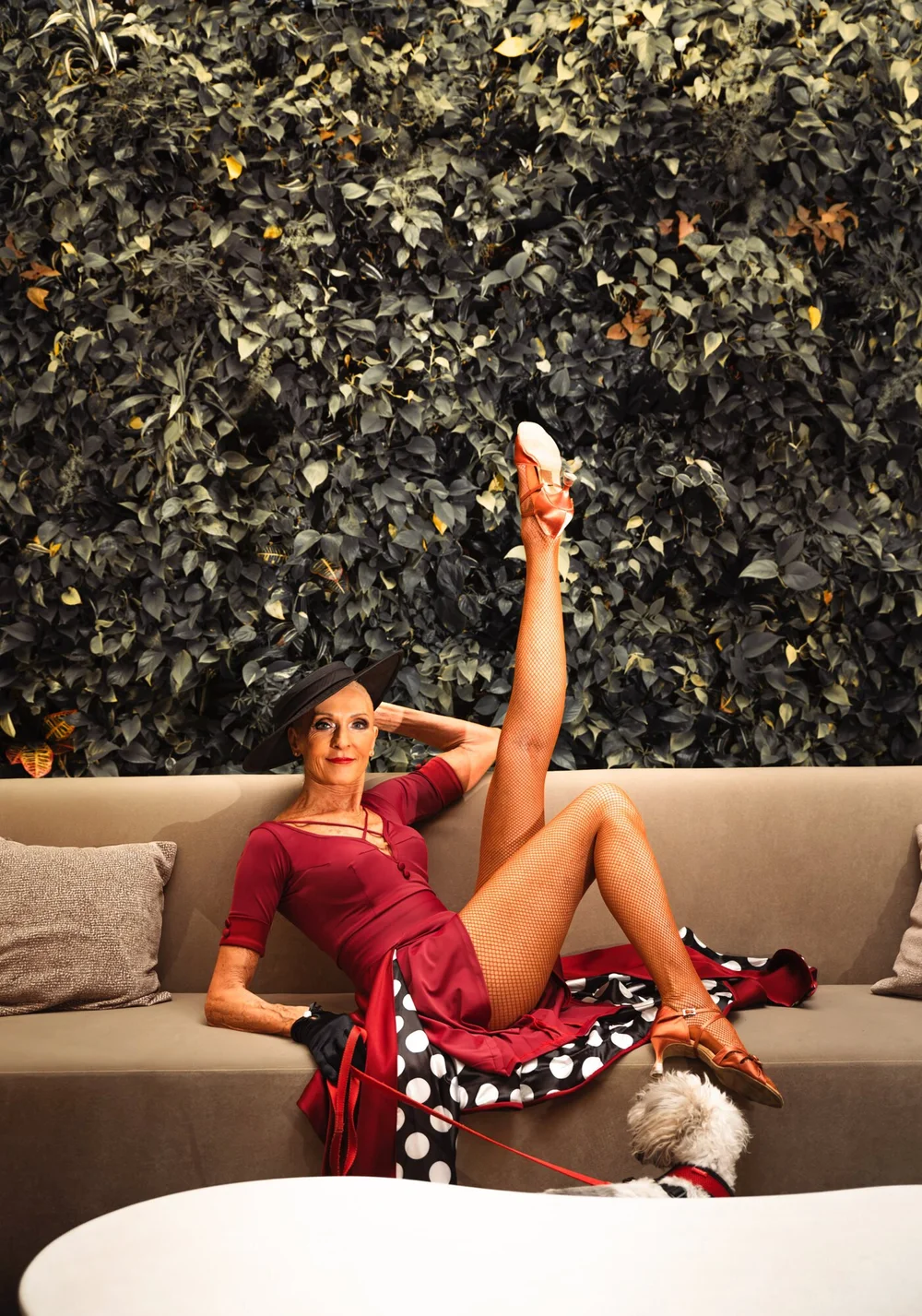
“At first, I had a black belt, but when I saw it on the dress, I wanted a more monochromatic look. So I changed the belt to match the color of the dress. The only contrasting color would come from the polka dots inside the overskirt. Doré added the large polka-dot fabric you see in the final dress. I thought that was the best! Then I found the hat and gloves to finish the look.”
Did the costume affect the choreography?
“Yes, the hat was part of the idea from the beginning. I found so many hats on Amazon that didn't work, and I returned a lot of them. The hat needed to be big, but I also had to be careful with the size. With a big brim, you could hit Mayo while dancing! So we had to be careful with the turns and make sure I could move underneath without the hat getting in the way. It was all a process. But man, it was so much fun! I really enjoyed that!”
How did you decide what Mayo would wear?
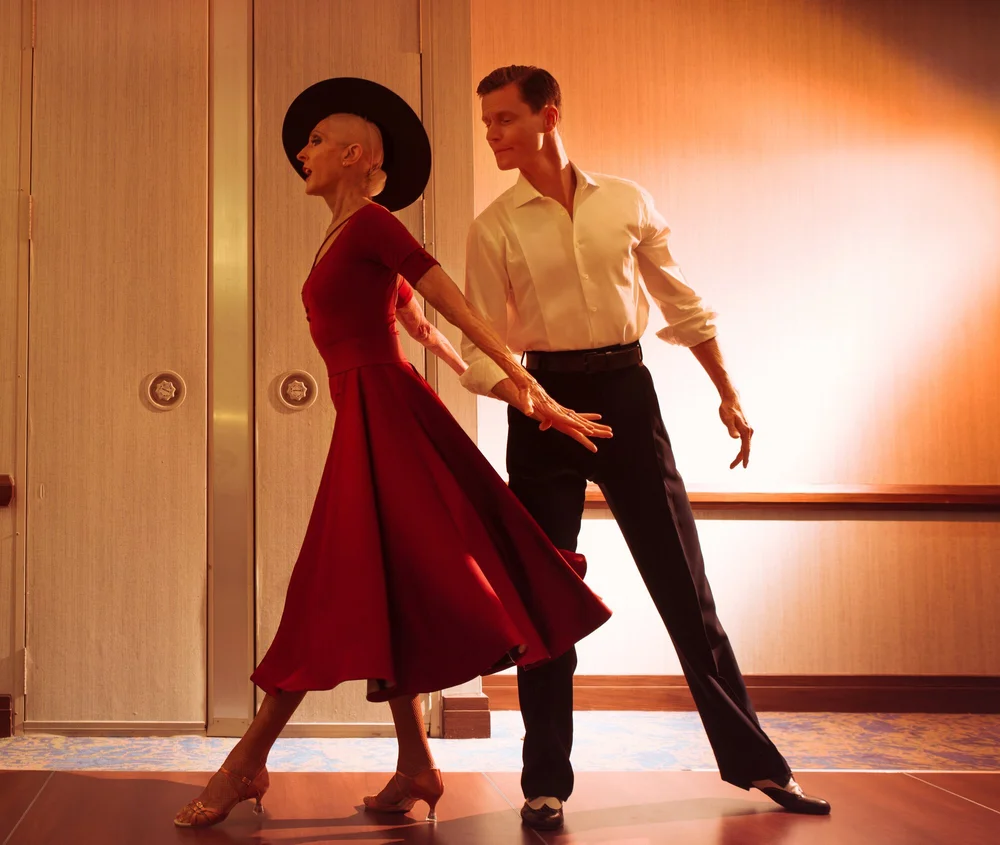
“For Mayo's costume, he had to match the era. I looked at a lot of different styles, including sporting looks. I had three possibilities, but we decided that this really cool Dean Martin look would work. That cool, sexy Dean Martin vibe. That's what we ended up with.”
“Mayo had worn the shirt to a friend's vow renewal ceremony in Canada just a couple of weeks earlier. So he says to me, ‘How about, just for memory's sake, I wear that shirt?’ I thought, wow, what a great idea! But then, at dress rehearsal, he says, ‘It feels so weird not wearing a dancer shirt. It feels so bulky!’ He's used to dancing in skin-tight shirts. So there he was, wearing black ballroom pants and an ordinary dress shirt, open at the collar, with his bow tie undone and his sleeves rolled up.”
“He looked so handsome.”
Yes, handsome indeed. The perfect “boyfriend look.”
The Glamour Girl
Tell me, who is the woman you're portraying? She is fascinating.
“My initial thought was, I'm a party girl. I go out a lot, and I'm a glamour girl. But then I'm partying too much. This is the fifties. You have this middle-class lady who wants a little thrill.”
“She goes out to these bluesy jazz clubs to see what's going on. Maybe she has a boyfriend, and he's had it up to here with all this. Because, you think back to the fifties, if you were a proper lady, you didn't go to jazz clubs. You really just didn't. That was my impression of it.”
“So, following the lead from T-Bone Walker's lyrics, ‘Glamour girl, glamour girl, I ain't got no use for you,’ Mayo's character is trying to push me away. But at the very end, I kind of lure him back in, and then we walk off the dance floor together.”
“It is seduction, but flirtatious. Coquettish, I would say.”
By the time we reached the end of our delectable lunch, besides having been transported to the creative world of show dance, my one burning question had been answered. Black Coffee wasn't inspired by Dior, but by the memories and music of the fifties. Dior's influence, however, permeated the fashion of that era, whether consciously referenced or not. He was there, even if his name was not.
The elements of Black Coffee came together through a succession of choices, discoveries, experiments, and collaborations. Some things worked immediately; others had to be reconsidered or abandoned. Gradually, they came together into a cohesive and memorable work of art.
Much as we hope our lives will be. •
Credits & Sources
Photography: Jennifer Bladel
Photography location: Empire Dance Festival
Costume: Doré Designs
Hair: Boyko
From CINDY Magazine, Issue No. 2, Fall 2026. Read the full issue