THE OBJECTIVE EAR
•
THE OBJECTIVE EAR •

Black Raven
An American Smooth gown in black and metallic blue, inspired by starlings and ravens.
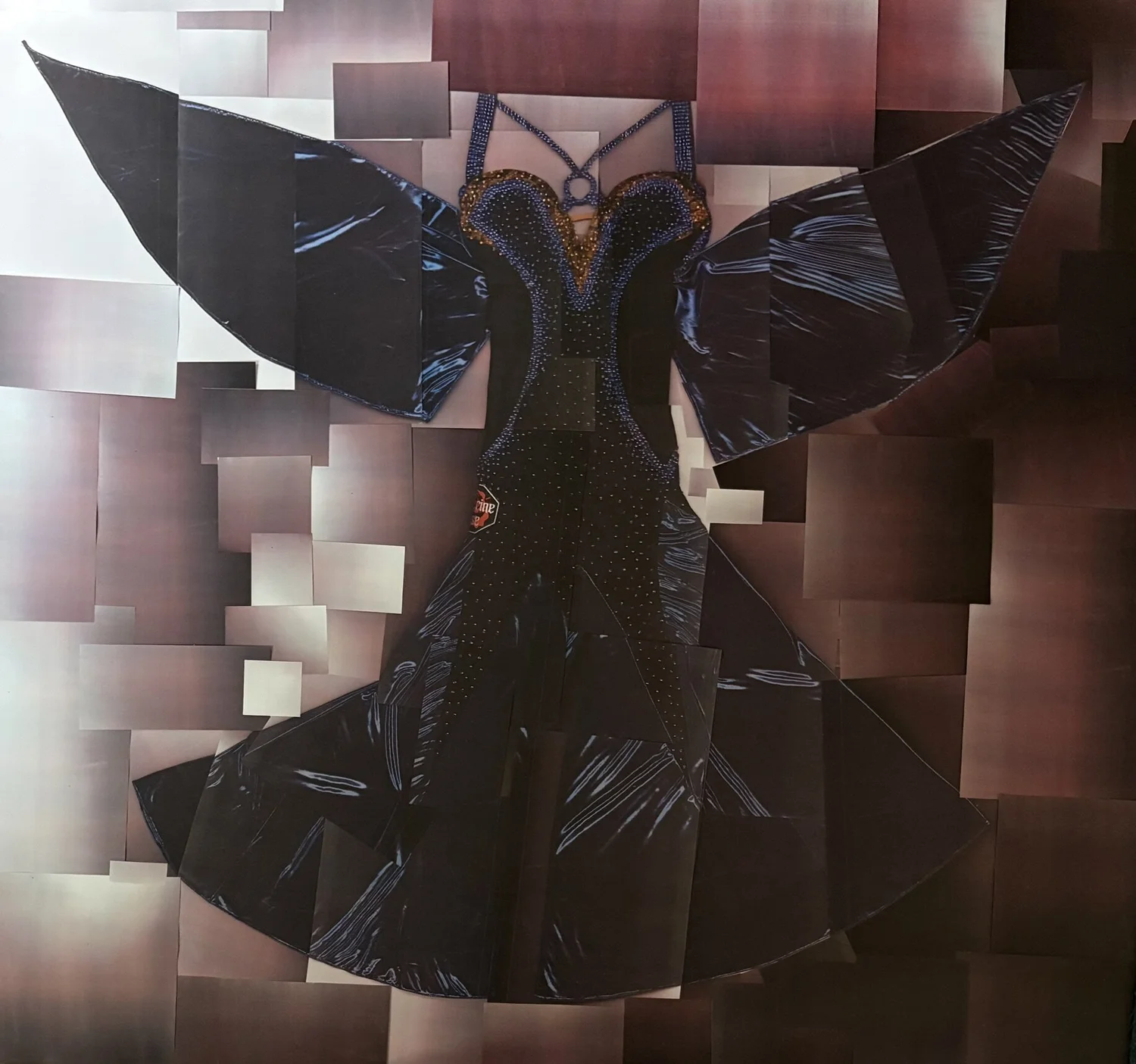
Under competition lighting, fabric extends the body. Rhinestones ignite. Mesh dissolves. Color intensifies beyond what daylight permits. What looks excessive up close becomes precise from across the floor.
This column examines ballroom dress not only for its details and fabrication, but for its function. These garments are engineered for motion, for the amplification of the body, and for the visibility of technique. The question is not why ballroom costumes look dramatic. The question is why they must.
The Dress: Black Raven
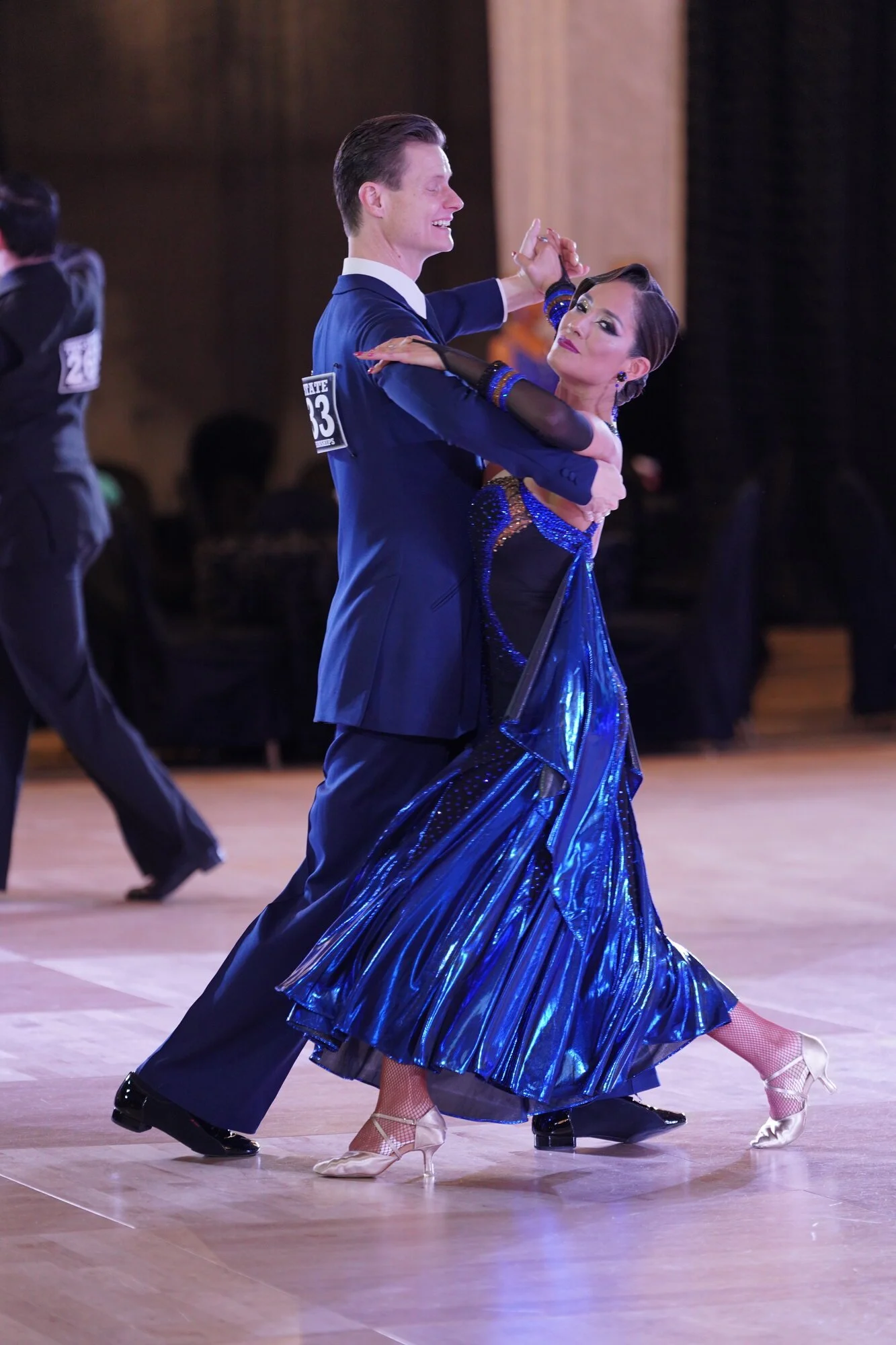
Originally designed for a Pro-Am dancer featured on Bravo TV's Dancing Queens, this American Smooth dress combines black fabric with an unusual metallic blue fabric that the designer*,* Kirtsen, from Catherine Rose Dancewear, had wanted to work with for years, intrigued by its appearance and how it might behave in motion. The result speaks for itself.
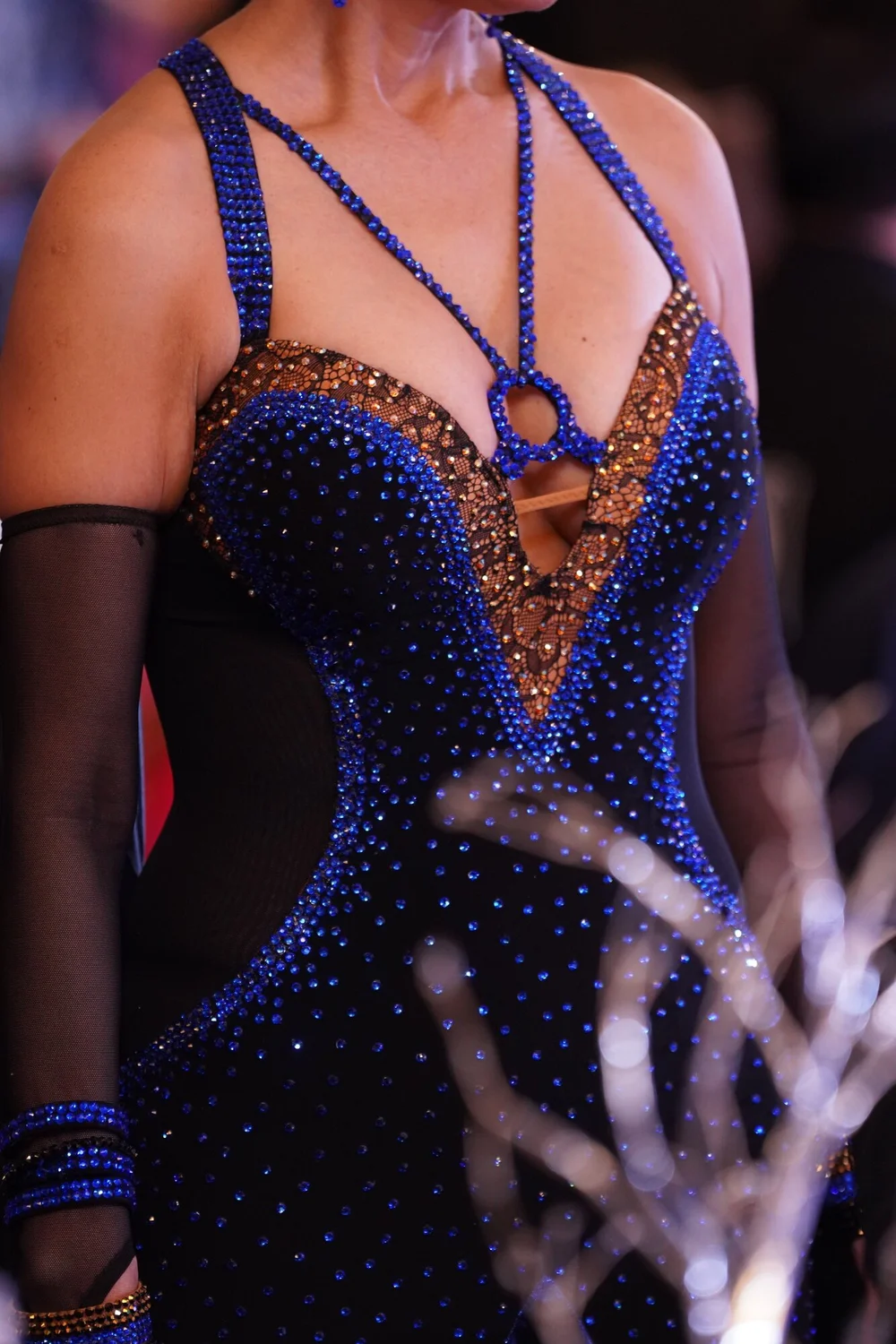
The deep V-shaped neckline is trimmed with an inset of delicate black lace that overlays the flesh-toned bodysuit. Scattered with iridescent topaz-colored crystals, the lace takes on a warm golden appearance. The inset stands out against the dark fabric of the dress, richly scattered with sapphire-colored rhinestones.
The lace is French Chantilly lace, known for its intricate floral patterns, fine netting, and distinctive scalloped edges. It is often used in luxury lingerie.
In its original version, the dress featured a metal ring at the bust. For this reincarnation, however, the ring has been covered with flesh-colored mesh and black lace to blend with the surrounding fabric, then embellished with additional sapphire-colored rhinestones.
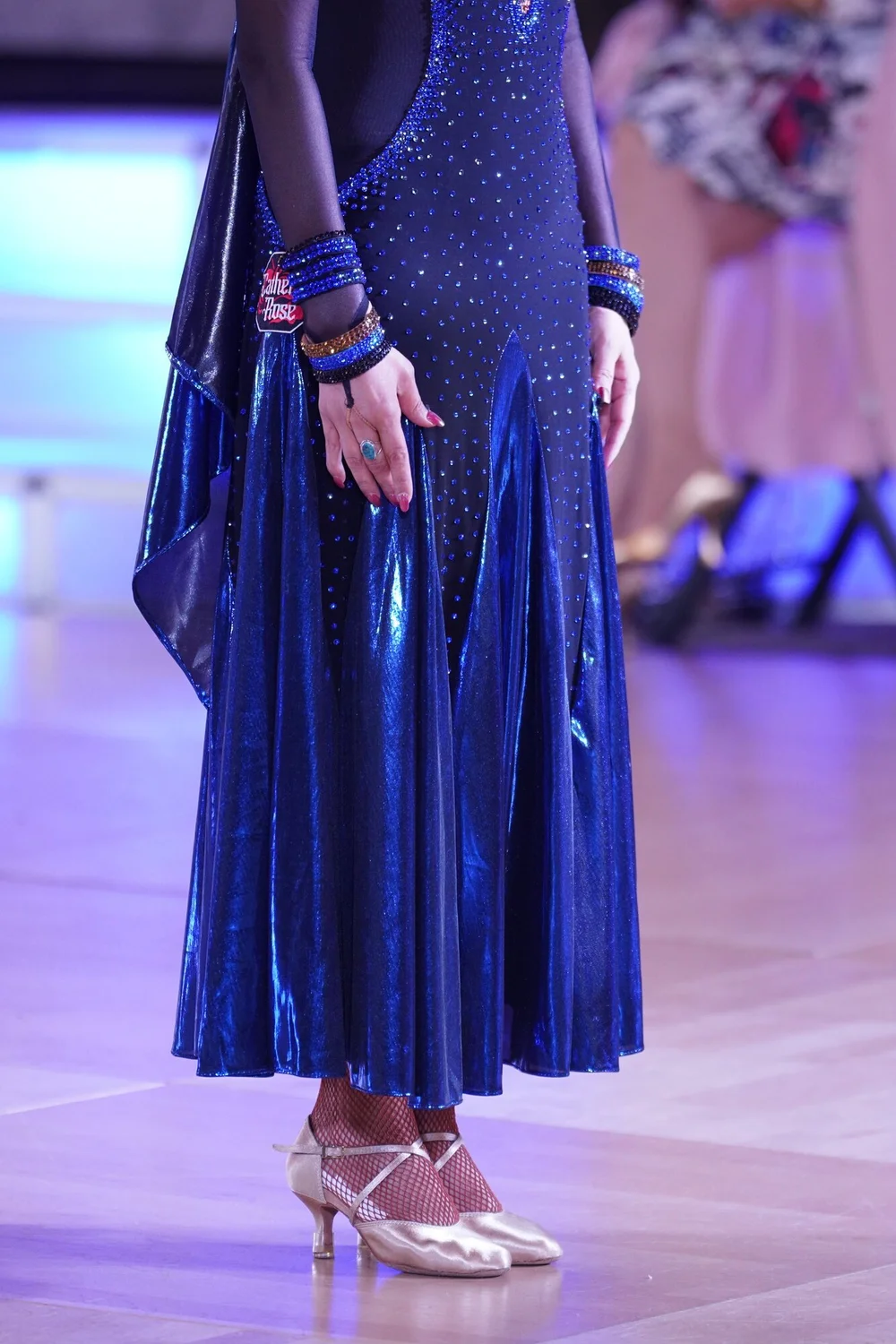
The metallic blue skirt comes alive as the dancer twirls, reflecting the ballroom lights with a shifting brilliance. Its appearance changes with the dancer's movement, revealing flashes of blue against the darker silhouette.
The floats, made from the same fabric as the skirt, extend from the back of the dress, unfurling like wings as the dancer sweeps across the floor, amplifying the movement.
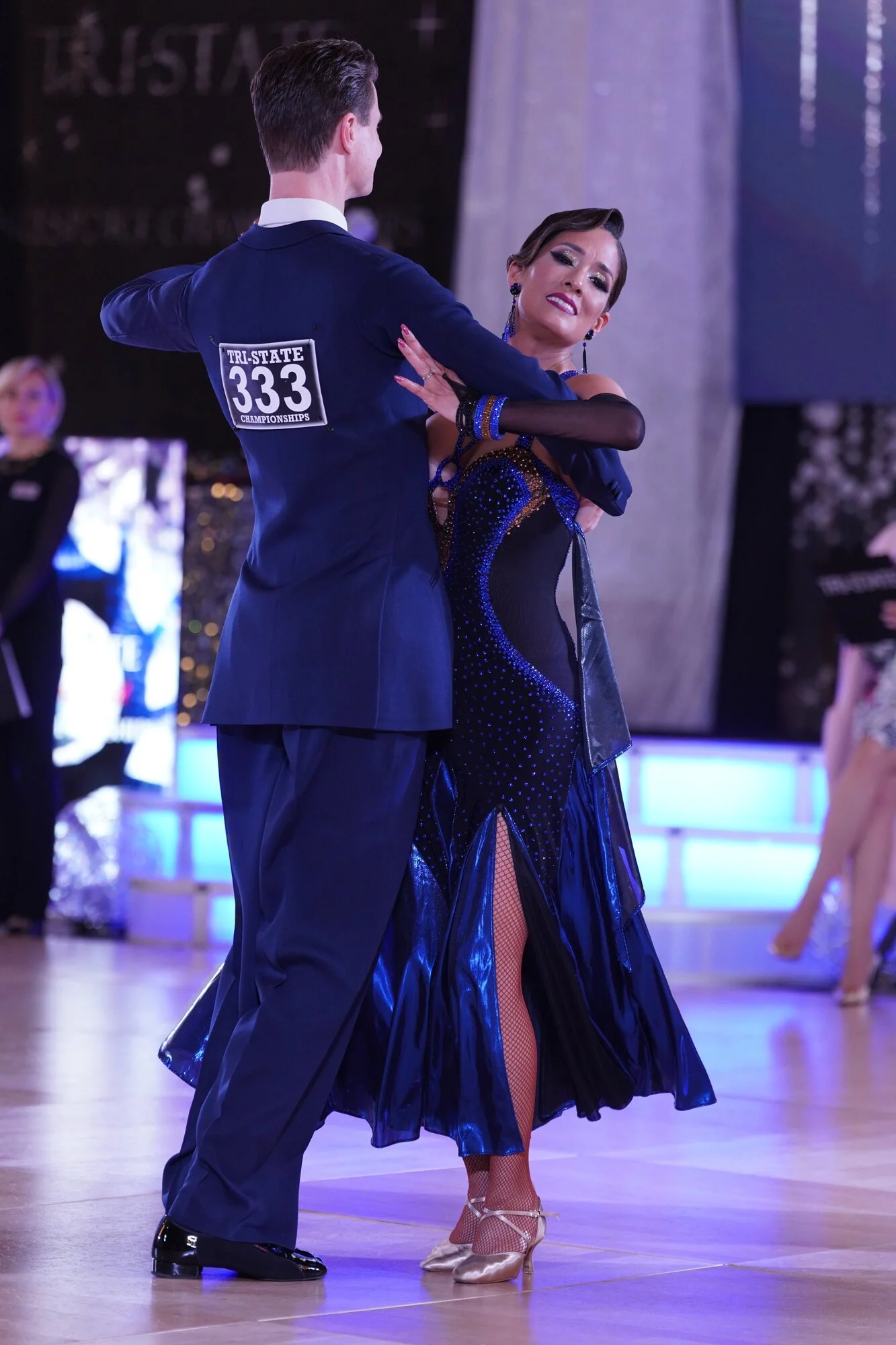
As the dress took shape, the designer drew inspiration from the iridescent plumage of African starlings and jet-black ravens, whose feathers reveal a bluish sheen in the light. Associated with folklore and witchcraft, the raven suggested a sense of mystique that the designer recognized in the dress. She imagined a woman whose femininity carries a commanding presence and strength. •
Credits & Sources
Artwork: Cindy Gallagher
Photography: Dance Production House
Dress: Catherine Rose Dancewear
Suit: MK Style
Hair and makeup: Boyko
Event: Tri-State Challenge DanceSport Championships
From CINDY Magazine, Issue No. 2, Fall 2026. Read the full issue

Second Skin: Wearing the Dance
Under competition lighting, fabric extends the body. What looks excessive up close becomes precise from across the floor.
Under competition lighting, fabric extends the body. Rhinestones ignite. Mesh dissolves. Color intensifies beyond what daylight permits. What looks excessive up close becomes precise from across the floor.
This column examines ballroom dress not only for its details and fabrication, but for its function. These garments are engineered for motion, for the amplification of the body, and for the visibility of technique. The question is not why ballroom costumes look dramatic. The question is why they must.
The Dress: Emerald Rhythm
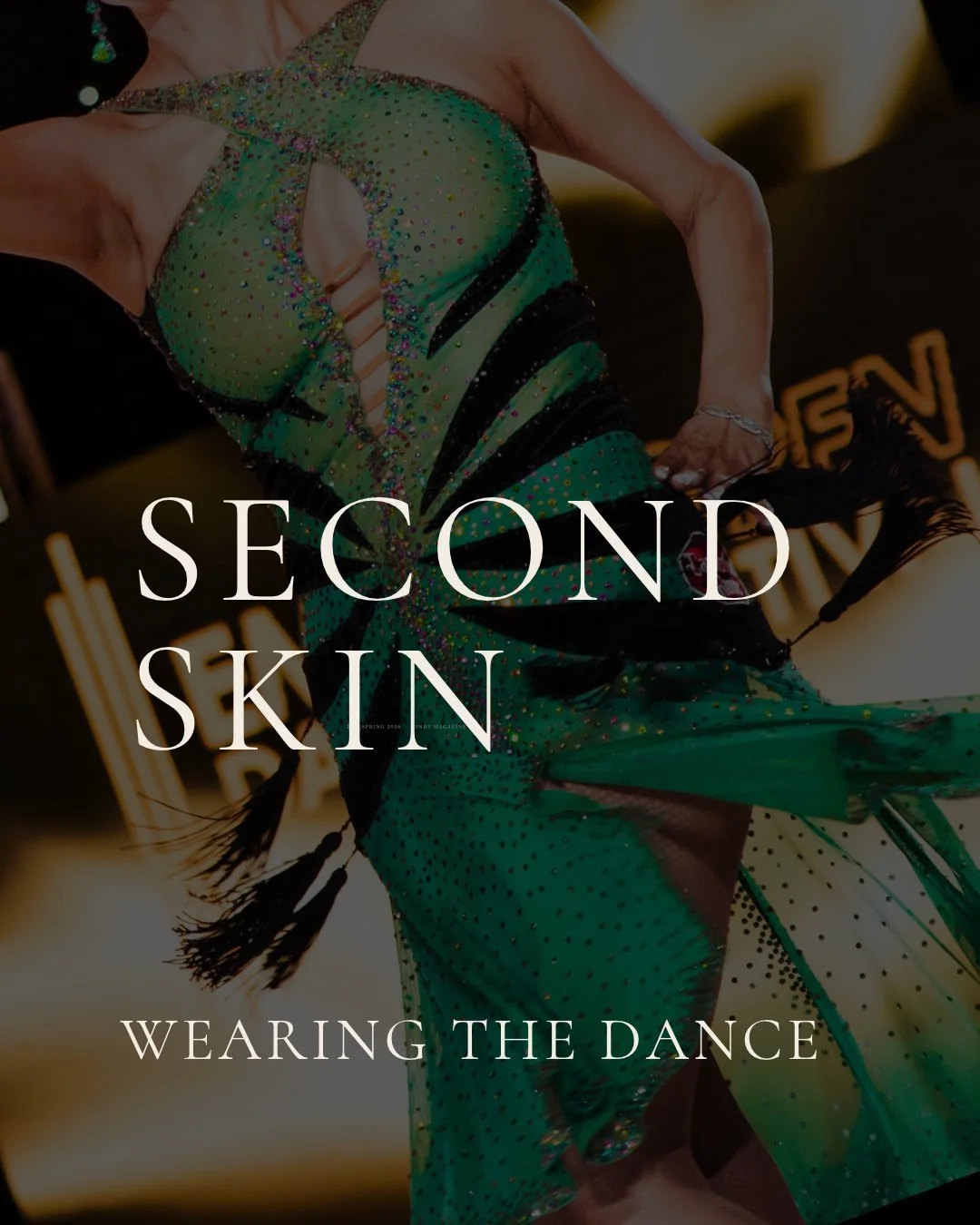
Cut in a vibrant emerald stretch mesh and black velvet, the dress was originally designed for a professional dancer competing at the Emerald Ball DanceSport Championships in Los Angeles, organized annually by Wayne and Donna Eng.
Across the bodice and torso, the bands of black velvet radiate outward through the emerald mesh in a series of directional lines that hugs and accentuates the body, given it shape. It is these velvet bands that give the dress its most striking quality. The darker velvet creates contrast against the luminous green, guiding the eye toward the center of the body and emphasizing the dancer’s shape from across the floor.
Stones scatter across the mesh, shifting color as the body moves — sometimes golden, sometimes pink, sometimes violet — catching light, and eyes, from different angles of the ballroom.
The skirt is constructed as an eight-panel fluted silhouette designed for motion. Crystals placed along the hem add weight so the fabric swishes faster through turns and wraps around the legs at the end of a spin, allowing the movement of the body to remain visible from a distance.
Originally created for a Rhythm dancer, the dress prioritizes danceability. The skirt can be lifted and shaped through the music in solo moments, while tassels added at the hip introduce a second layer of movement that echoes the rhythm of the steps.
After its debut on the professional floor, the dress was eventually returned to the designer’s atelier. For its second life on the floor. •
Photography by Jennifer Bladel · From CINDY Issue No. 1, Spring 2026. Read the full issue